Excellent


Can you really get too much sleep?
Sleep is a fundamental part of our lives and our health. But can you really get too much sleep? The answer is yes. When we think of sleep problems, we tend to think only of insomnia and sleep deprivation. But the opposite — hypersomnia, or oversleeping — can also be an issue. It’s not only the amount of sleep, but the quality of it that counts.
Too much sleep: reality or myth?
Sleeping too much can actually have negative effects on your health. Research shows that prolonged sleep can increase the risk of heart disease, diabetes and obesity. It can also affect mental health and lead to issues like anxiety and depression.
It’s important to note that the issue isn’t necessarily the quantity of sleep, but rather the quality of it.
What causes oversleeping?
The reasons for oversleeping vary. It might happen because you’re fighting an illness, or catching up on sleep after a few short nights. But ongoing oversleeping can be a sign of a sleep disorder, mental health condition or other underlying issue. If you consistently sleep too much and it’s causing stress in your daily life, doctors may refer to it as excessive quantity of sleep (EQS). When the cause of your sleepiness can’t be identified, the condition is called idiopathic hypersomnia. You can read more about oversleeping here.
How much sleep do adults need?
Most adults need at least seven hours of sleep per night. Too much sleep can affect your health too. How much sleep you need each night depends on your daily habits, activities, overall health, and your individual sleep patterns. Older adults often need slightly less sleep, while younger adults and teenagers tend to need more.
Health conditions that can lead to oversleeping
Other symptoms of oversleeping can include excessive daytime sleepiness, drowsiness, and headaches1. A range of health conditions can also lead to oversleeping and excessive daytime sleepiness, including sleep disorders like sleep apnoea, insomnia and narcolepsy, depression and anxiety, obesity, cardiovascular disease, diabetes, chronic pain and certain medications.
How sleep masks and earplugs can improve sleep quality
Using physical aids like sleep masks and earplugs is a simple, effective way to improve sleep quality. By blocking out light and noise, they create a calmer, darker sleep environment that supports more restorative sleep2.
The best earplugs for sleep
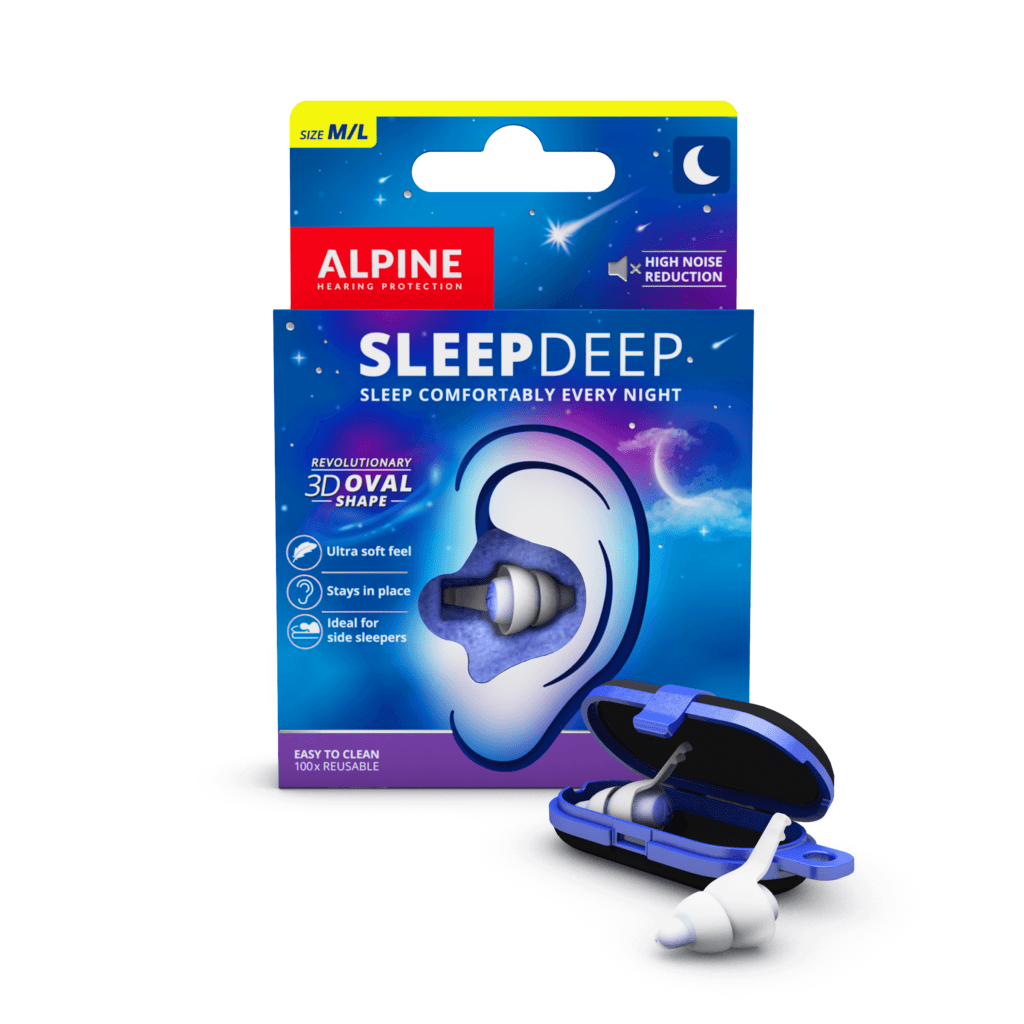
SleepDeep earplugs are an effective sleep tool: they offer high noise reduction and are designed to be comfortable enough to wear all night, even on your side. Made from a soft ThermoShape material that conforms to the shape of your ear, they’re as comfortable as they are effective at blocking sound. Their unique noise-reducing gel adds an extra layer of attenuation, and the oval shape is designed to follow the natural curve of the ear canal — supporting deep, undisturbed sleep. They’re also reusable up to 100 times, making them an economical and environmentally friendly choice. They come with a practical case so they’re easy to take with you and stay protected from dust and dirt.