Excellent


Does sleep lower your biological age?
Ageing isn’t just about wrinkles and grey hair. Behind the visible signs, a complex process is happening inside the body — cells repair, regenerate and adapt. In recent years there’s been growing focus on the idea of “biological age”: the actual age your body is, based on its function and health, rather than just the number of years you’ve been alive.
What influences your biological age most isn’t necessarily genetics — it’s lifestyle. And among the factors research keeps coming back to, sleep ranks surprisingly high.
Good sleep isn’t only important for energy and mood. It plays a decisive role in your body’s ability to slow the mechanisms that otherwise accelerate ageing. That includes everything from inflammation to skin renewal and the cells’ ability to protect themselves.
What does it mean to be biologically older than your age?
Biological age is about how well the body actually functions. It’s measured by markers like blood pressure, immune response, hormone balance, cell renewal and inflammation. Two people of the same chronological age can have very different biological ages.
If you sleep too little or at the wrong times, it can damage the body’s ability to repair itself. The body starts behaving as if it’s older than it really is.
This doesn’t mean sleep is a miracle cure. But it does mean that a lack of sleep puts the body under pressure — and that shows up both inside and out.
Inflammation and ageing are closely linked
One of the clearest connections between sleep and biological age has to do with inflammation. When the body doesn’t get enough rest, the level of inflammatory activity in the tissues rises. It’s often called low-grade inflammation, and you don’t usually feel it directly — but it affects organs, skin and circulation over time.
Several studies have shown that poor sleep is associated with higher levels of C-reactive protein and other inflammatory markers. Over the years that adds up, putting strain on the cardiovascular system and accelerating the body’s overall ageing process.
Skin reflects how you sleep
Your skin has its own rhythm too. During the day, it focuses on protecting itself from outside influences. At night, the focus shifts to repair. This is when new collagen is produced and when damage from light and pollution is addressed.
If your sleep is interrupted, that process is delayed. The skin’s ability to renew itself is weakened. Over time the skin loses elasticity and becomes more sensitive.
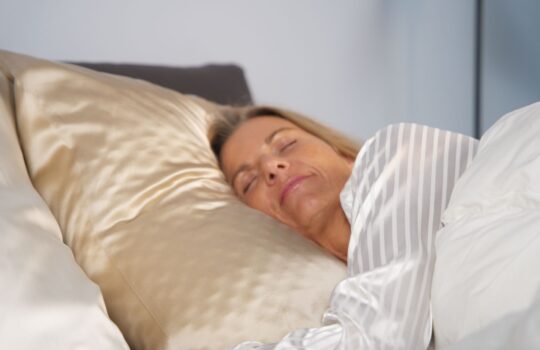
Sleeping in a calm, dark environment supports the skin’s natural rhythm. A surface like silk feels gentle on the skin and minimises friction. A blacked-out bedroom — or a blackout sleep mask — supports the body’s own circadian rhythm and helps cells recover undisturbed.
Sleep also affects cellular ageing
At the cellular level, sleep influences how telomeres — the protective ends of our chromosomes — change over time. Shorter telomeres are associated with greater biological ageing. Studies suggest that consistent, high-quality sleep is linked with longer telomeres, while ongoing sleep deprivation is connected with the opposite.
During deep sleep the body also flushes out waste products from the brain and liver, and processes hormones and toxins. Sleep quality therefore has a direct impact on your body’s internal renewal.
Sleep quality matters more than length alone
It’s not just about how many hours you sleep. The quality of that sleep is at least as important. Disrupted or shallow sleep — even for eight hours — can be less beneficial than six hours of stable sleep in calm and darkness.
The environment around you plays a big part here. Temperature, sound, light and the materials you sleep on all send signals to the body. The fewer the disturbances, the deeper the sleep.
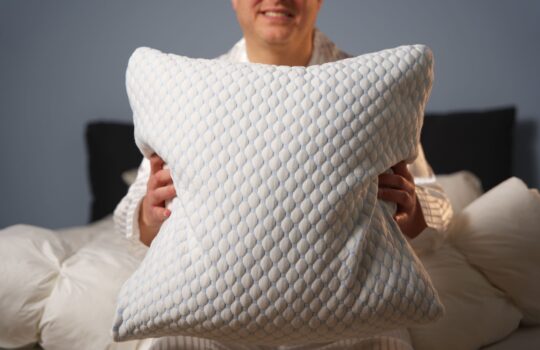
That’s why a silk pillow or a silk pillowcase can make a real difference. It isn’t about luxury — it’s about reducing the small irritations that pull you out of deep sleep, and supporting your body in the work it’s already trying to do.
What good sleep looks like for your biological age
Research points to a number of measurable improvements that come with better sleep:
• Lower levels of stress hormones like cortisol
• Faster skin renewal and improved elasticity
• Longer telomere length in older people
• Increased growth hormone secretion during deep sleep
The research suggests that it isn’t any single factor that makes the difference — it’s the combination of sleep quality, duration and rhythm. The most important thing is to give the body the right conditions night after night.
It’s not about sleeping yourself younger
Sleep doesn’t make you younger on its own. But good sleep gives the body the calm it needs to stay healthy for longer. It counteracts the factors that would otherwise speed up ageing. That applies to skin, circulation and the inner structure of cells alike.
When you sleep steadily and undisturbed, the body has a much better chance to recover, regulate stress, and activate the processes that keep it youthful. It’s not about sleeping more — it’s about sleeping better. And that affects how you feel, and how you age.
When sleep feels like an investment
Many people treat sleep as something that comes second. But the latest research shows that sleep isn’t just a pause — it’s an active phase where the body renews itself. If you want to stay fresh for longer, in skin and in health, sleep is not the place to cut corners.
Sleeping perfectly isn’t always possible. But sleeping better is. And it starts with treating sleep as a part of your daily health — not just rest, but maintenance.