Excellent


What is blue light?
Blue light is part of the visible light spectrum and has a wavelength between 380 and 500 nanometres. It’s a type of light emitted by the sun and by many digital screens — computers, smartphones and tablets. But what does that actually mean for us? Read on to find out how blue light affects our sleep, and how you can protect yourself from its negative effects.
Quick summary
In this article we’ll look at what blue light is, how it affects sleep, and how to protect yourself from its potential negative effects.
What does blue light actually do to the body? Pros and cons
Benefits
- Better cognitive performance: Blue light can improve memory, learning and concentration.
- Mood lift: Blue light can have a positive effect on mood and help combat the symptoms of depression and seasonal affective disorder (SAD).
- Increased energy and alertness: Blue light can help raise energy levels and alertness during the day.
Drawbacks
- Sleep disruption: Exposure to blue light in the evening can disrupt our circadian rhythm and make it harder to fall asleep — leading to sleep problems and chronic sleep deprivation.
- Eye strain and fatigue: Long-term exposure to blue light, especially from screens, can cause eye strain, fatigue and discomfort.
- Possible long-term eye damage: Excessive exposure may, over time, contribute to more serious eye issues — though research in this area is still developing.
Different types of blue light
Blue light can be split into two categories: long blue light (450–500 nm) and short blue light (380–450 nm). Each has different properties and effects on the body and mind.
Long blue light (450–500 nm)
Long blue light is less energetic than short blue light and generally has more beneficial effects. It plays an important role in regulating our circadian rhythm by suppressing the production of melatonin during the day. That helps us feel awake, alert and focused.
Short blue light tends to have a bigger impact on our health and well-being. Exposure to short blue light, particularly in the evening and at night, can disrupt our circadian rhythm by suppressing melatonin. That can make it harder to fall asleep and to get a good night’s sleep, leading to sleep problems and chronic sleep deprivation.
Short blue light (380–450 nm)
In addition to its impact on the circadian rhythm, long blue light can also have a positive effect on mood and cognitive function. Research suggests it can improve memory, learning and concentration, and help with the symptoms of depression and SAD.
Long-term exposure to short blue light can contribute to eye strain, fatigue and discomfort after many hours in front of a screen. It’s also linked to potential long-term eye health concerns.
To take advantage of the benefits of blue light while limiting the downsides, the key is to limit exposure to short blue light — especially in the evening and at night — and to consider using tools like blue light glasses and screen filters.
How to use blue light glasses
- Choose non-prescription blue light glasses if you don’t need vision correction. Browse Nattelyst for a range of blue light glasses.
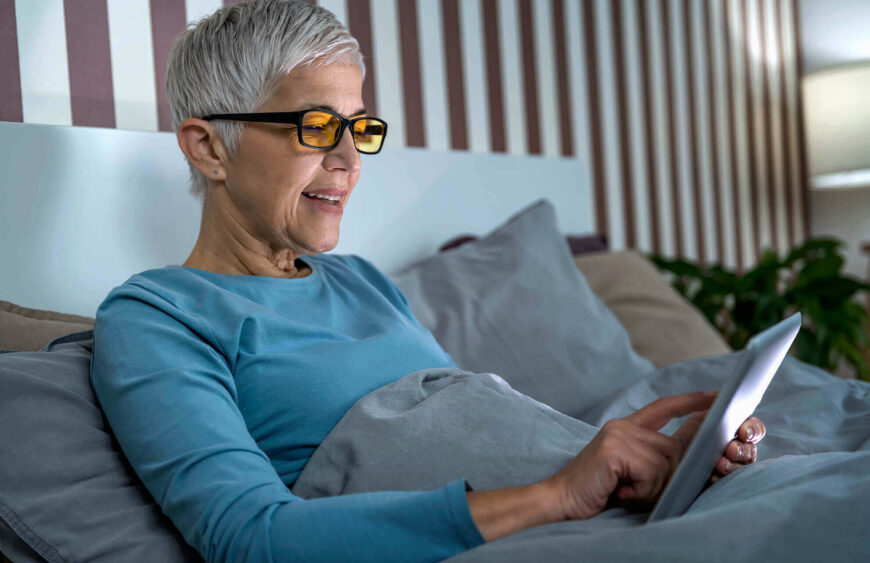
- Wear your blue light glasses when looking at screens, especially in the evening, to reduce exposure to blue light.
- Take regular breaks from screens to give your eyes a rest.

Frequently asked questions
How does blue light affect the eyes?
Blue light can cause eye strain and fatigue, especially after long-term screen exposure. It may also increase the risk of macular degeneration, an eye condition that can lead to vision loss.
Do you need to wear blue light glasses all day?
You don’t need to wear blue light glasses all day. They’re most useful in the evening, when you’re spending time in front of screens, to support better sleep. You can also use software that adjusts your screen’s colour temperature based on the time of day.
Can blue light glasses improve sleep quality?
Blue light glasses can help improve sleep quality by reducing exposure to blue light in the evening, making it easier to fall asleep and supporting a healthy circadian rhythm.
Further recommendations and resources
To improve your sleep and reduce the effects of blue light, consider the following:
- Create a sleep-friendly environment by keeping your bedroom dark, cool and quiet.
- Try to avoid screen time for at least an hour before bed.
- If you have to use a screen in the evening, wear blue light glasses or use software that adjusts your screen’s colour temperature.
- Maintain a consistent sleep routine — go to bed and get up at the same time every day.
- Take regular breaks from screens during the day to give your eyes a rest and prevent eye strain.
For more advice and help, visit Nattelyst or get in touch with our customer service on the contact page.